
The sun is already bright when we gather at the start line in Iwaki, Japan, warming the crisp morning air. Volunteers bustle around us, runners stretch and bounce on their toes, and a hum of anticipation fills the space. Someone laughs nearby. A group of runners snaps photos. The energy is unmistakable.
I look around and take it all in.
I don’t speak the language, and I am very clearly a foreigner among a sea of Japanese runners, but somehow that doesn’t matter. The shared ritual of race morning—nervous excitement, quiet focus, hopeful anticipation—transcends words.
In a few minutes, we’ll all begin moving forward together.
And I still can’t quite believe I’m here.
This journey began back on Kauai about a week after my previous marathon, when I received a phone call offering me the opportunity to travel to Iwaki to participate in their annual Sunshine Marathon. Even now, it still feels a little surreal—one of those unexpected gifts life occasionally places in your path.
Training and trip planning began almost immediately. Five months later, my husband and I—both avid runners and marathoners—were boarding a plane bound for Japan.
Getting to Iwaki was a journey in itself: plane, train, and automobile. We were incredibly grateful that our guide met us at the airport and helped shepherd us through the organized chaos of Tokyo Station before escorting us safely to Iwaki.
By the time we finally reached our hotel, we had been awake for more than twenty-four hours. We fell into bed with the kind of exhaustion only long travel can produce and slept deeply.
The next morning greeted us with clear skies and cold air.
Downstairs, we discovered the hotel’s breakfast buffet—and what quickly became our favorite amenity: a magical coffee machine that seemed capable of producing any hot drink imaginable. Fueled by caffeine and curiosity, we headed out for a short run through the city streets, stretching our travel-weary legs and breathing in the chilly morning air.
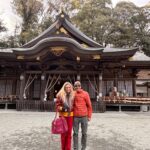
Later that morning, we met our guides again and enjoyed a traditional Japanese-style lunch, seated cross-legged around a low table. From there, we spent the afternoon exploring some of Iwaki’s cultural treasures, including the stunning Shiramizu Amida-dō and Kotohira Shrine. Both places carried a quiet beauty that made us pause and simply take it in.
The following day came quickly, and before long, we were driving the marathon course we would run the next morning.
Previewing a course always brings mixed feelings. It’s reassuring to see the terrain ahead of time, but it also makes the distance feel very real. As we drove along the coastal roads, I found myself mentally noting landmarks and turns—anything that might help later when the miles began to add up.
At the same time, I tried not to think too much about the effort ahead.
Marathon runners develop a certain skill for temporarily ignoring the magnitude of what they’re about to do.
The afternoon passed with a delicious Italian lunch, lively conversation with our guides, and a visit to Aquamarine Fukushima. As someone who loves nature, I was fascinated by the aquarium’s exhibits showcasing marine life and Japan’s diverse coastal ecosystems.
Soon evening arrived, bringing the pre-race meet-and-greet. The room filled with smiling faces, fellow runners, and the easy camaraderie that forms whenever people gather around a shared challenge. It was lively and warm, but the night ended early.
After all, there was a race in the morning.
Race morning arrives with the familiar flurry of pre-race rituals: pinning bibs, checking shoelaces, making last-minute adjustments.
When we arrive at the venue with our guide, we feel like minor celebrities as we’re escorted past the main parking areas and brought directly to a gymnasium where the other guest runners are gathering.
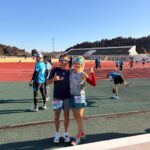
Before long, we’re warming up on a nearby track, shaking out our legs and letting the nerves settle.
Then suddenly it’s time.
Standing in the start queue feels both surreal and grounding. I still can’t quite believe I’m about to run a marathon in Japan. And yet the moment itself feels deeply familiar.
One of the beautiful things about running is that no matter where you are in the world, the simple rhythm of putting one foot in front of the other remains the same.
The starting signal sounds, and the crowd begins to move.
The early miles feel almost effortless. Cool air fills my lungs as we run through the city streets, eventually making our way toward the coastline where the ocean glimmers under the morning sun. Spectators line the streets, waving, clapping, and calling out encouragement. Even when I can’t understand the words, the meaning comes through clearly.
Run strong. Keep going.
Aid stations appear at regular intervals, volunteers offering water and snacks with enthusiastic smiles. The sense of community is everywhere—runners supporting runners, spectators cheering strangers as if they were old friends.
Some miles pass quickly.
Others take more patience.
Around mile 15 or 16, the race begins to demand more from me. My legs start to protest, and the familiar mental negotiation of the marathon begins.
This is the moment runners know well—the entrance to what we affectionately call the pain cave.
I focus on small goals: the next mile marker, the next turn, the next aid station. One step at a time. Just keep moving forward.
Eventually, blessedly, the finish line comes into view.
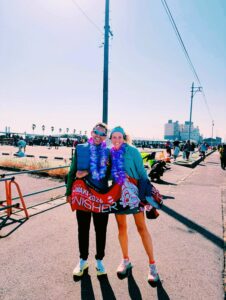
Crossing it brings a rush of relief and quiet triumph. My legs are exhausted, but my heart feels incredibly full.
In the hours afterward, my husband and I do what runners always seem to do after a marathon: we talk about it endlessly.
We replay the race mile by mile—the hardest sections, the surprising moments of strength, the places where things went sideways. There’s a particular post-race energy that only runners understand: wired but exhausted, thrilled but sore.
Eventually, we hobble back to our rooms to rest before one final dinner with the other guest runners. The evening becomes a celebration of shared effort and accomplishment, complete with incredible food and stories traded across the table.
The next morning, we board a train out of Iwaki, waving goodbye to our guide as the station slowly disappears behind us.
From there, we continue on to Shinagawa Station, where my husband and I spend a few extra days exploring Tokyo on our own.
Those days give me time to begin reflecting on everything we experienced.
The kindness and generosity of the people we met.
The quiet beauty of Iwaki’s temples and coastline.
The familiar realization that comes after every difficult race—that somewhere along the way, when things got hard, I found the strength to keep going.
More than anything, I feel a deep appreciation for the health and ability that allow me to run these miles.
And an overwhelming sense of gratitude for this unexpected opportunity.
The Iwaki Sunshine Marathon was not just another race.
It was a reminder that sometimes life surprises you with something extraordinary—and that leaving a little room for those surprises may be one of the best things we can do.
Mahalo to the Kauai Visitors Bureau for this once in a lifetime experience!